30-Year Treasury Yield at 6% Could Crush Stock Market Gains
A spike in the 30-year Treasury yield to 6% would hammer equities and deepen losses in bond funds, analysts warn.
Wall Street is dangerously unprepared for a scenario in which the 30-year Treasury yield surges to 6%, a level that would undermine stock market gains and inflict severe additional losses on bond funds already reeling from years of rate volatility. The warning signals a growing disconnect between equity valuations and the bond market's shifting risk calculus.
The long bond serves as a foundational benchmark for asset pricing across the financial system. When yields on the 30-year Treasury climb sharply, they drive up the discount rates used to value future corporate earnings, mechanically compressing stock multiples — particularly for growth and technology names that have powered recent market rallies.
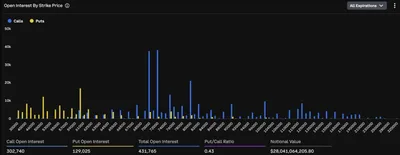
Read more Bitcoin Options See $5 Billion Cluster Signal Bullish Outlook →
Bond funds would face a compounding problem. Portfolios already carrying unrealized losses from prior rate hikes would see those deficits widen further, pressuring institutional investors and pension funds that hold large allocations to long-duration fixed income. The ripple effects could force asset reallocation at a scale the broader equity market has not priced in.
The 6% threshold represents a psychologically and mathematically significant level not seen on the long bond in roughly two decades. Reaching it would redefine the risk-free rate expectations underpinning trillions of dollars in portfolio construction, potentially triggering a broad repricing of risk assets at a moment when equity markets remain near historically elevated valuations.
Continue reading at MarketWatch.com