Bitcoin Slips After U.S. Inflation Data Fails to Lift Prices
Bitcoin fell as U.S. inflation data disappointed bulls, while spot ETFs logged their first back-to-back outflows of August.
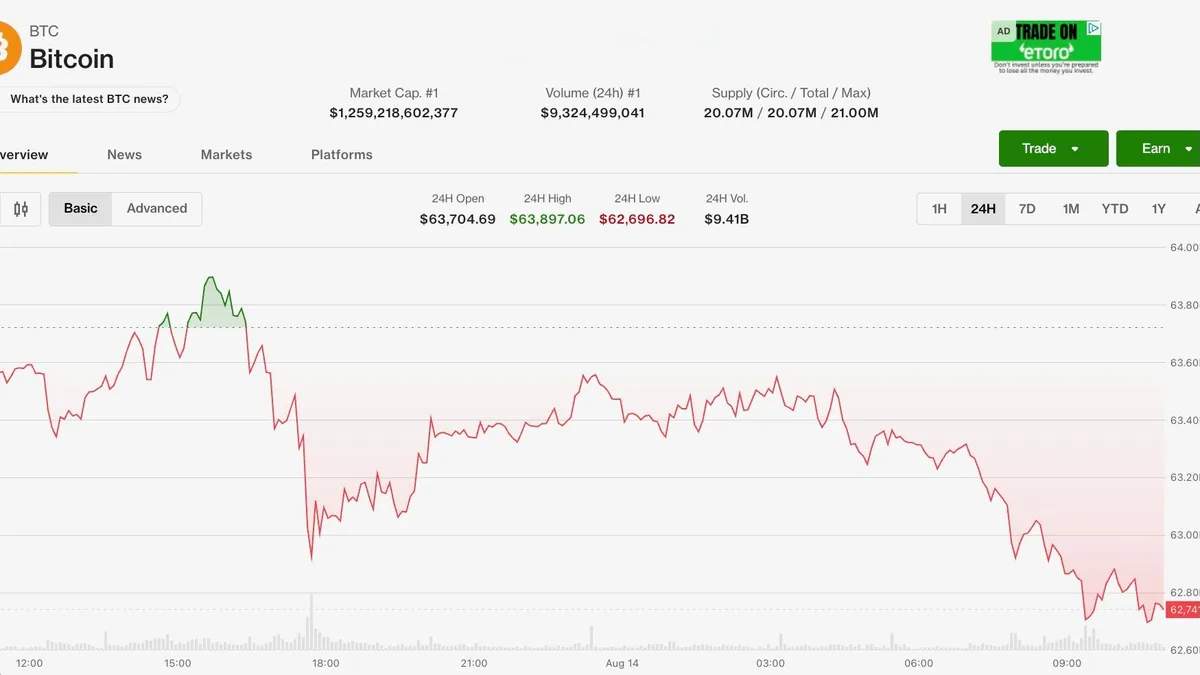
Bitcoin retreated Wednesday after the latest U.S. inflation report failed to deliver the bullish catalyst traders had anticipated, leaving the world's largest cryptocurrency under pressure and snapping a stretch of relative calm in digital-asset markets. The price decline came despite inflation figures that some analysts had expected to revive risk appetite and push fresh capital into crypto.
Spot Bitcoin exchange-traded funds recorded back-to-back days of net outflows — the first consecutive two-day drawdown of August — signaling that institutional and retail investors channeling money through regulated products pulled back rather than buying the dip. ETF flow data has become a closely watched barometer of demand since the products launched earlier this year, and even brief streaks of outflows can weigh on near-term sentiment.
Read more Star Equity to Acquire Harte-Hanks at $5 Per Share →
The inflation print, while significant for broader markets, did not spark the dollar weakness or Federal Reserve pivot speculation that typically sends Bitcoin higher. That dynamic underscores how sensitive crypto has become to macroeconomic crosscurrents, with traders increasingly treating Bitcoin as a risk asset rather than an inflation hedge in the short term.
Analysts noted that the failure to rally on what many viewed as market-moving data could indicate thinner conviction among buyers at current price levels. Without a decisive macro trigger or a fresh wave of ETF inflows, Bitcoin may face continued choppiness heading into the remainder of the month.
Continue reading at CoinDesk.