US-Iran Military Clashes Escalate as Gulf Bases Struck, Oil Holds Steady
US forces hit Iranian infrastructure and 90 coastal targets as Iran retaliates against Bahrain and Kuwait bases, yet oil markets show muted reaction.
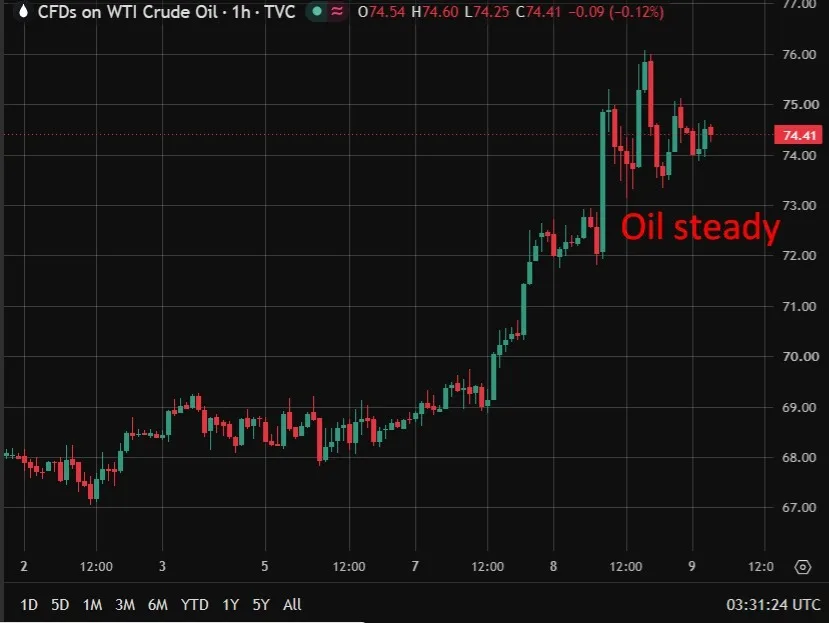
Iran and the United States sharply escalated their military confrontation during Asia-Pacific trading hours Thursday, with American cruise missiles destroying two railway bridges in Iran's Golestan province — marking the first US strike on Iranian civilian infrastructure since a now-lapsed ceasefire — while Iran's Islamic Revolutionary Guard Corps launched retaliatory missile attacks on US military bases in Bahrain and Kuwait, triggering air-raid sirens across the Gulf.
US Central Command confirmed American forces struck roughly 90 Iranian coastal military targets in a sweeping offensive, hitting air-defense systems, missile and drone storage facilities, naval assets, and logistics infrastructure near the Strait of Hormuz. Iran's parliament speaker Mohammad Bagher Ghalibaf warned the Strait of Hormuz would remain closed in response, a threat that carries enormous weight for global energy markets given the waterway's role as a critical oil-transit chokepoint.
Read more Chip Stock Euphoria Clashes With War Fatigue in Markets →
Despite the severity of the exchanges, crude oil prices showed a surprisingly restrained response, ticking only marginally higher even after earlier surging roughly 7% when President Donald Trump threatened larger strikes and reportedly set his sights on Kharg Island, Iran's primary oil export terminal. The muted follow-through suggests traders are weighing the conflict's escalation against diplomatic signals: Trump publicly stated that Iranian officials had contacted Washington seeking a deal, a claim reported by Axios that injected a degree of uncertainty into what had appeared to be an accelerating military confrontation.
Elsewhere across Asia-Pacific markets, a chipmaker-led rally lifted South Korea's Kospi and Japan's Nikkei despite the geopolitical overhang. China's factory-gate inflation climbed to a four-year high even as consumer prices cooled, with June CPI coming in at 1% year-over-year against a 1.2% forecast. The Bank of Korea also flagged a potential rate hike as domestic inflation runs at its hottest pace in years, adding a monetary policy dimension to an already volatile regional trading session.
Continue reading at Forexlive.