Crypto Holds Steady as Oil Spikes on Iran Strikes, Fed Warns on Rates
Digital assets face a dual stress test as Middle East tensions push oil higher and the Fed leaves the door open to further rate hikes.
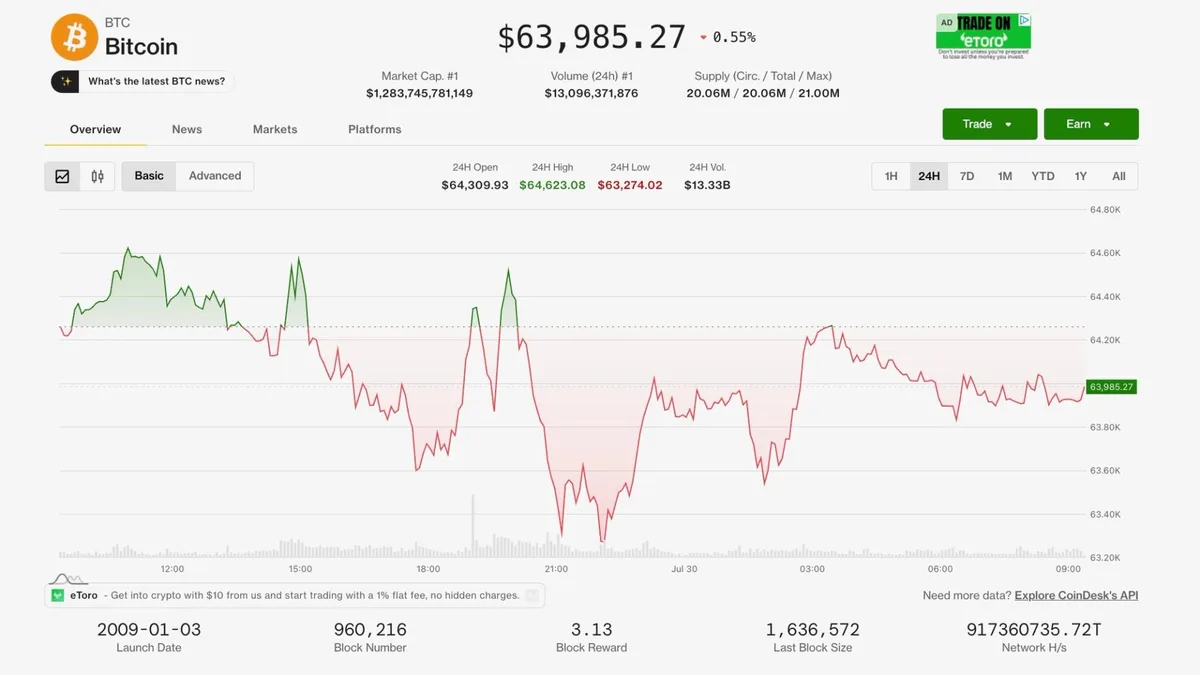
Cryptocurrency markets demonstrated notable resilience Friday as two simultaneous macro shocks rattled global risk sentiment: a fresh escalation in Middle East tensions following strikes involving Iran sent oil prices sharply higher, while Federal Reserve officials signaled that interest rate increases remain on the table despite recent cooling in inflation data.
The back-to-back pressures represent a meaningful stress test for digital assets, which have historically sold off alongside other risk-sensitive investments when geopolitical uncertainty spikes or monetary policy tightens. The fact that crypto prices largely held their ground suggests either growing market maturity or that investors have already priced in a higher-for-longer rate environment.
Read more Meta Drops 8% as Microsoft Surges 15% on AI Earnings Split →
Oil's surge adds an inflationary wildcard to an already complicated Fed calculus. If energy prices sustain their climb, they could reignite broader inflation readings, giving policymakers additional justification to keep borrowing costs elevated — a backdrop that has traditionally weighed on speculative assets including Bitcoin and altcoins.
Fed rhetoric reinforcing the possibility of additional hikes comes at a delicate moment for crypto, which staged a significant recovery in early 2024 partly on investor expectations that rate cuts were imminent. Any material shift in that timeline could test the conviction of buyers who entered the market anticipating looser financial conditions.
How crypto navigates this confluence of geopolitical risk and monetary policy uncertainty in the sessions ahead may offer the clearest read yet on whether the asset class has genuinely decoupled from traditional macro headwinds or remains vulnerable to the same forces that drove steep losses in 2022. Continue reading at CoinDesk.