Oil Edges Higher as Strait of Hormuz Stays Shut on US-Iran Standoff
WTI crude gained 0.7% Friday as the Strait of Hormuz remained effectively closed, while European stocks drifted and the yen outperformed.
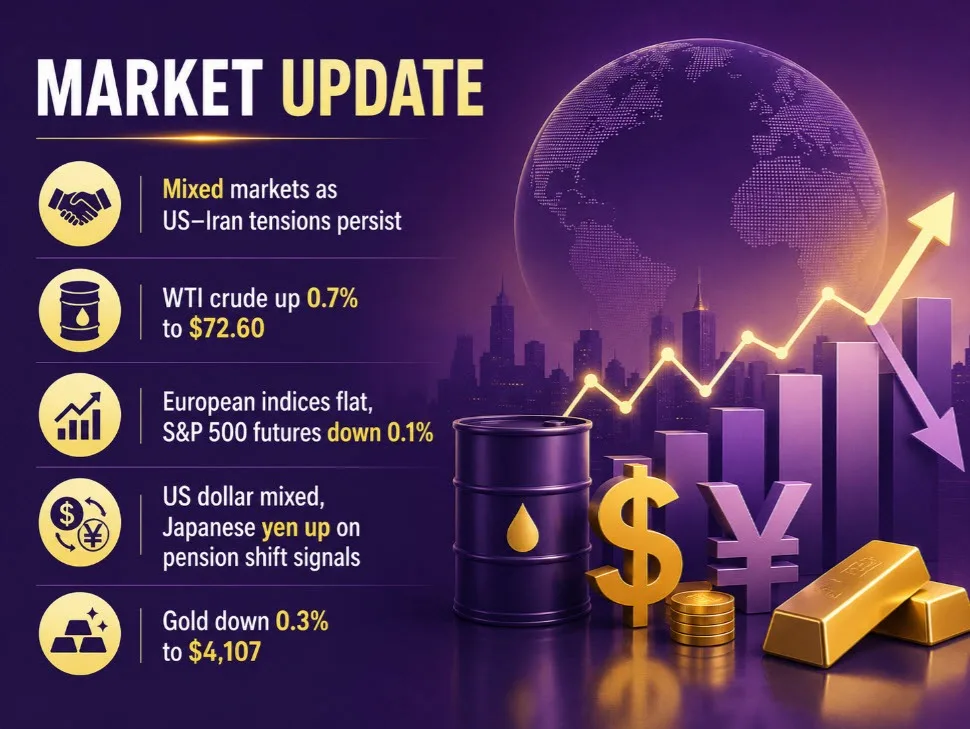
Oil prices nudged higher Friday as the Strait of Hormuz stayed in de facto closure amid unresolved US-Iran tensions, pushing WTI crude up 0.7% to $72.60 a barrel. Markets ended the week in a cautious holding pattern, with European equities little changed and S&P 500 futures slipping just 0.1% — a relatively quiet close given the geopolitical overhang that has defined trading this week.
A brief flicker of optimism emerged during the session after a US official suggested negotiations with Iran could still move forward, but the physical reality of restricted Hormuz flows continued to underpin crude prices. The International Energy Agency noted global oil supply rose 4.1 million barrels per day in June as some flows through the strait resumed, yet supply remained 9.4 million bpd below pre-war levels — a gap that keeps energy markets structurally exposed to any further escalation.
Read more Oil Prices Drop as Hormuz Shipping Concerns Ease →
In currency markets, the Japanese yen was the standout mover, with USD/JPY falling 0.3% to 161.80 after Japan signaled a significant pension portfolio reallocation earlier in the day. The dollar was otherwise subdued, with EUR/USD flat at 1.1430 and GBP/USD barely changed at 1.3425. The Bank of Japan is meanwhile expected to hold rates steady at its July meeting while maintaining its tightening bias, adding a policy dimension to yen volatility.
Elsewhere, gold slipped 0.3% to $4,107 and silver fell 0.9% to $59.45, while Bitcoin bucked the risk-off mood with a 1.7% gain to $64,368. US 10-year Treasury yields ticked up a modest 0.6 basis points to 4.547%, signaling little conviction in either direction heading into the weekend. Inflation data from Europe offered some relief, with German annual CPI confirmed at 2.3% and French inflation easing — both readings that reduce pressure on the European Central Bank.
With the week closing quietly, trader attention will pivot to the US Consumer Price Index report for June, due on July 14, which could materially reshape interest rate expectations heading into the second half of the year. Continue reading at Forexlive.