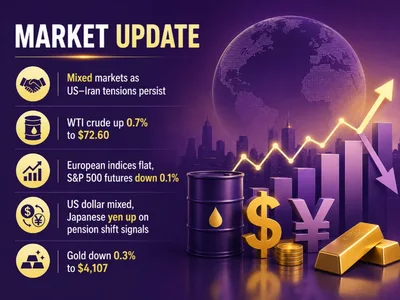
Asia Markets Rally as Yen Surges, Oil Holds Steady on Iran Calm
Asian equities climbed Friday on chip sector gains and yen strength, while oil held narrow ranges as US-Iran nuclear talks showed progress.
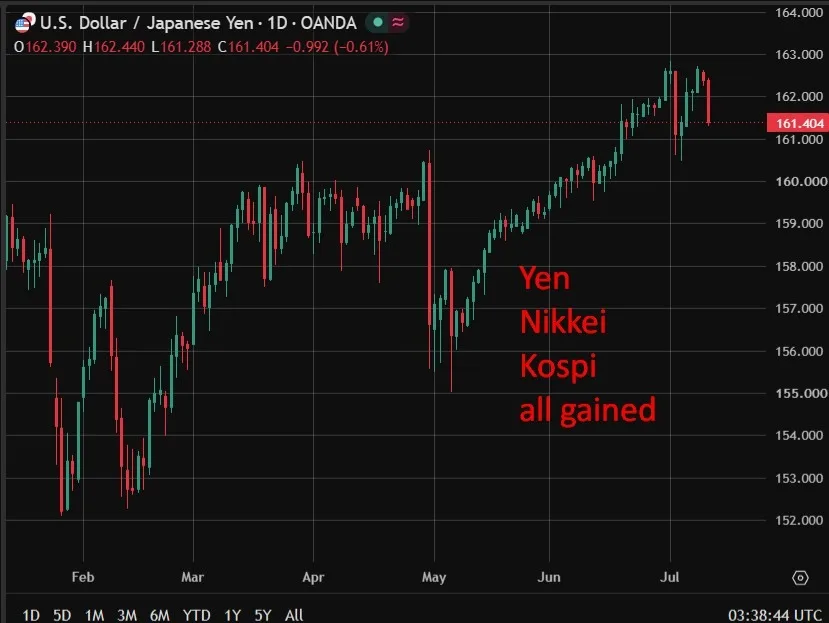
Asian markets rallied broadly on Friday as a combination of semiconductor sector momentum, fresh yen strength, and fading Iran-US geopolitical tensions gave investors reason to buy. The yen led currency moves after Japanese Finance Minister Katayama signaled measures to redirect domestic pension funds — including the massive GPIF — toward Japanese assets, a shift that rattled foreign exchange desks across the region. Equities followed the overnight Nasdaq lead higher, with chip-related stocks among the session's top performers.
Oil prices held within tight ranges as fears of a broader Middle East conflict subsided. Citigroup maintained its $75-per-barrel Brent base case for the third quarter, citing expectations of a US-Iran deal and a reopening of the Strait of Hormuz. A US official confirmed that nuclear negotiations with Tehran would continue, removing a significant near-term risk premium from energy markets.
Read more Oil Prices Drop as Hormuz Shipping Concerns Ease →
Japan's producer price index added fresh pressure on the Bank of Japan, coming in at 7.1% year-over-year for June 2026 — well above the 6.8% consensus estimate and sharply higher than the prior reading of 6.3%. That marks the fastest pace of factory-gate inflation since 2023, reinforcing market expectations that the BOJ remains on course to raise interest rates. A separate commentary from Japan's Kiuchi pushed back, arguing that FX moves are ultimately driven by interest rate differentials and inflation dynamics rather than government rhetoric.
South Korea separately acknowledged that the won remains misaligned against major currencies but expressed confidence that conditions would improve in the second half of the year. Meanwhile, the People's Bank of China set its daily USD/CNY reference rate at 6.7989, slightly weaker than the 6.7931 estimate, a modest signal of yuan management. Sovereign wealth funds globally were reported to be pivoting toward national-priority investments, even as artificial intelligence spending reached $404 billion industry-wide.
Continue reading at Forexlive.